


Dr. Mareike Baer
I completed my Bachelor's and Master's degree in Nutritional and Food Science at the University of Bonn. In 2019, I received my doctoral degree under the supervision of Prof. Dr. André Lipski with a thesis focusing on biofilms in milking machines. Since then, I have been working as a postdoctoral researcher and habilitation candidate in the Department of Food Microbiology and Hygiene.
My research combines experimental microbiology with computational analysis of complex microbial systems. I am particularly interested in long-read sequencing technologies, microbial interaction systems, and the development of bioinformatic workflows for large-scale sequencing data. In addition to my research activities, I am actively involved in teaching, including supervision of Bachelor’s and Master’s theses, lectures, and the organization of practical laboratory courses.
Research profile
- Long-read sequencing (ONT and PacBio)
- Computational analysis of microbial sequencing data
- Genome-resolved metagenomics
- HPC-supported bioinformatic workflow development
- Microbial interaction systems and quorum sensing
- Bacterial genome reconstruction and phylogenomics
- Food-associated microbial communities
Current research areas

Long-read Nanopore sequencing
The Oxford Nanopore (ONT) MinION sequencer is a portable device which is able to process long nucleic acid strands in real time. The sequencing reads are created by measuring changes in an ion current while molecules pass through a nanopore. Recent improvements in sequencing chemistry and basecalling accuracy have substantially increased the applicability of ONT long-read sequencing for genome-resolved microbial analyses. Compared to short-read approaches, long-reads facilitate the reconstruction of complete bacterial genomes and plasmids by spanning complex, repetetive regions. In addition, full-length 16S amplicon sequencing enables species-level taxonomic resolution of many bacterial taxa.
I use ONT long-read sequencing for bacterial genome reconstruction and microbial community analysis of complex food-associated samples, including raw milk and plant-based food systems. My current interests include the development of experimental and computational strategies for long-read-based metagenomics, particularly in host-associated and compositionally complex datasets.
(Long-read) Bioinformatic analysis
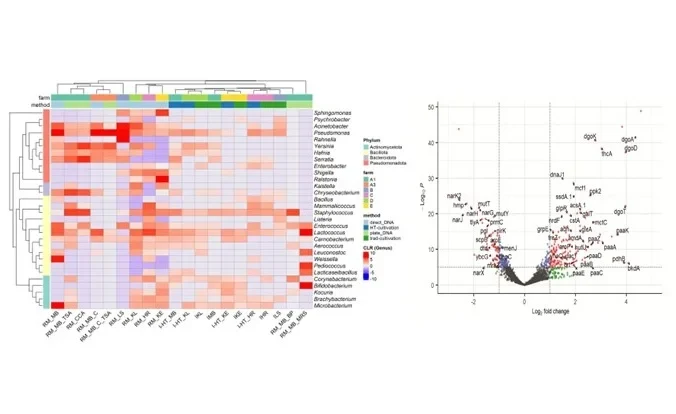
Long-read sequencing technologies (ONT and PacBio) are increasingly complementing established short-read approaches, but still pose several computational challenges for downstream sequence analysis. While full-length amplicon sequencing enables species-level resolution for many taxa, accurate classification is often limited by incomplete or insufficiently curated databases. I am interested in developing and adapting bioinformatic workflows for the analysis of long-read microbial sequencing data. I developed initial bioinformatic workflows for analyzing both ONT and PacBio full-length 16S amplicon data, by using a custom RefSeq database to improve species-level-assignment.
In addition, I perform computational analyses of long-read bacterial genome sequencing data as well as transcriptomic and differential expression analyses using open-source tools on the University’s HPC cluster “Marvin”. For recurring analysis tasks, I am currently developing scalable and reproducible workflows by combining and adapting different open-source approaches.
Microbial interaction in food-associated environments
Due to their co-occurence in the food-environment, microbial cells interact with each other. This interaction can bei either competitive, neutral, or cooperative. Cooperative behaviour can be coordinated by secreting signal molecules, whose local accumulation alters gene expression of the recipient. Such communication is called quorum sensing, which is another focus of my research.
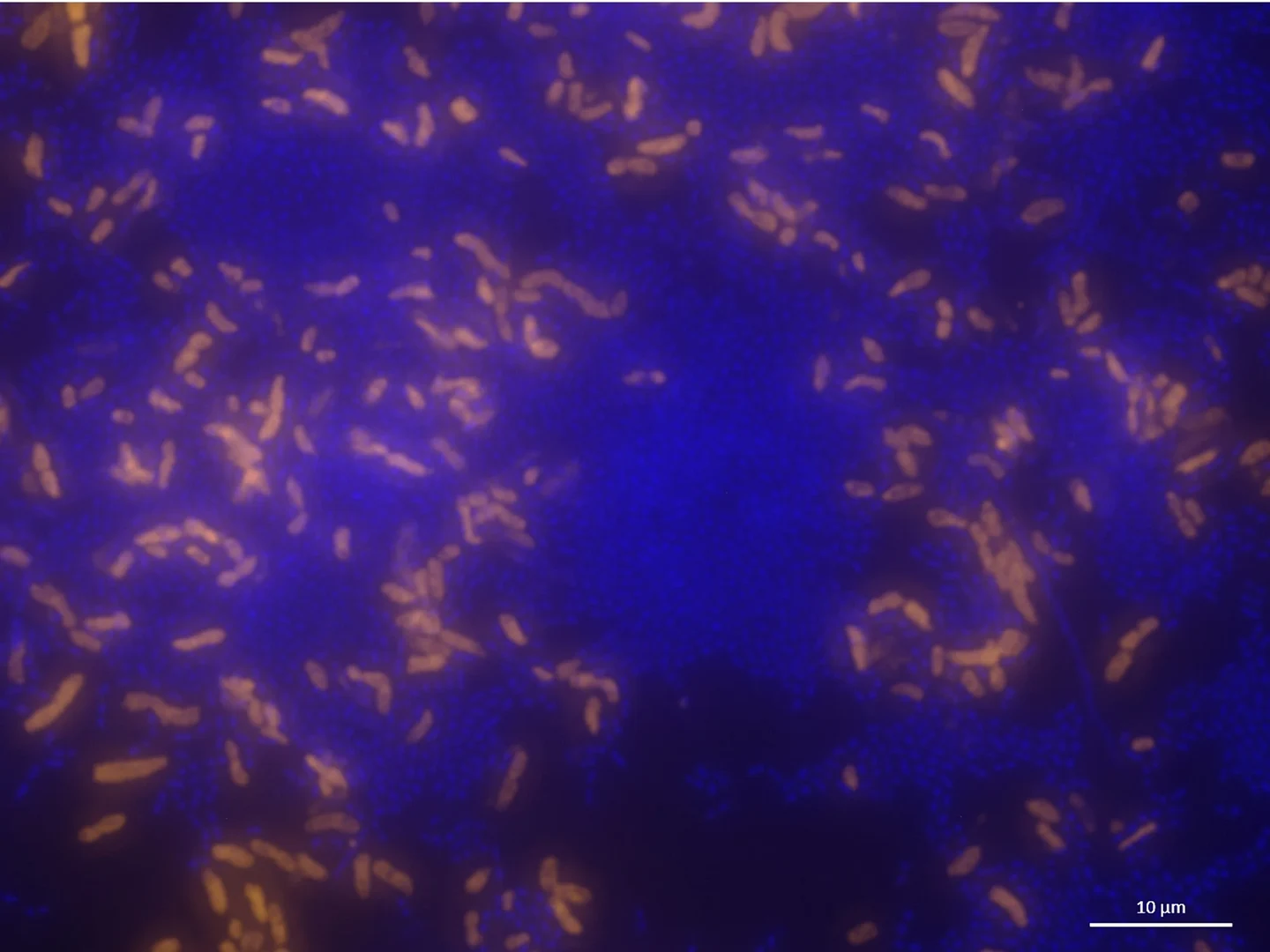
I aim to investigate microbial interaction dynamics in food-associated environments using a combination of cultivation and molecular methods. For example, cooperative biofilm formation and spatial proximity of cells is observed by fluorescence microscopy. Dual-species transcriptomic analysis will be used in the future to assess genes and metabolic pathways involved in cooperation between selected strains.
Interspecies communication
Microorganisms communicate with each other by secreting small signalling molecules, so called 'autoinducers'. While the classes N-Acyl homoserine lactones (AHL) and autoinducing peptides (AIP) are secreted mainly as highly specific intraspecies signals by Gram-negative and Gram-positive bacteria, respectively, autoinducer-2 (AI-2) is considered an interspecific signal. It can be secreted and sensed by a wide variety of Gram- negative and Gram-positive taxa, which makes it particularly interesting for analysing its role in interspecies interaction.
My aim is to investigate the role of AI-2-mediated signalling in microbial interaction dynamics in food-associated habitats. For this prupose, I use a bioluminescent reporter strain to asses AI-2 production specifically in food-associated isolates. I also established a gas chromatography-mass spectrometry (GC-MS) method allowing AI-2 quantification.

Taxonomic analysis and phylogeny
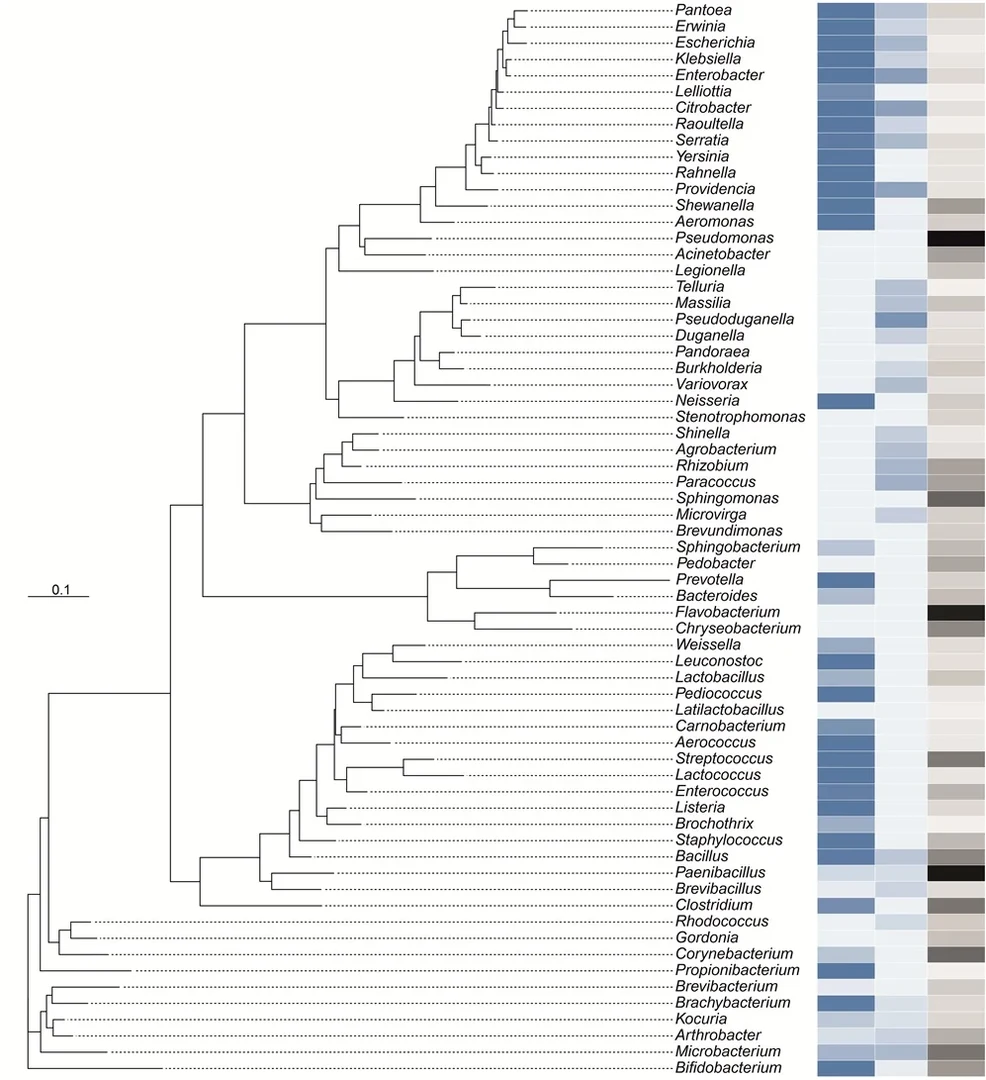
Since many bacterial strains isolated from food cannot be assigned to known bacterial species, our working group participates in the description of new bacterial species. This includes phenotypic and chemotaxonomic characterization as well as genotypic analysis and subsequent phylogenetic tree reconstruction.
I am mainly responsible for analysis of the genome sequences of the isolates and type strains. This involves genome sequencing and assembly as well as bioinformatic downstream analysis, such as comparing average nucleotide identities (ANI) and building phylogenetic trees after multiple sequence alignment. The large genomic datasets are analysed on the University's HPC cluster "Marvin", for which I recently established a pipeline, creating ANI-matrices and phylogenetic trees starting with the isolate sequence assemblies.
Publications
Flegler, W.A., Behrens, F., Sturmhöfel, A. T., Sonntag, M., Schmitt, L., Rang, K., Deeken, H. F., Sun, Y., Maack, G.-C, Büscher, W., Baer, M. and A. Lipski. 2025. Long-read 16S amplicon analyses and improved cultivation techniques as joined approach for the identification of viable bacterial populations in silage. J. Appl. Microbiol. 136(7): lxaf151. doi: 10.1093/jambio/lxaf151
Baer, M., Höppe, L., Seel, W. and A. Lipski. 2024. Impact of DNA extraction, PCR amplification, sequencing, and bioinformatic analysis on food-associated mock communities using PacBio long-read amplicon sequencing. BMC Microbiol. 24:521. doi: 10.1186/s12866-024-03677-8
He, X., Wang, D., Jiang, Y., Li, M., Delgado-Baquerizo, M., McLaughlin, C., Marcon, C., Guo, L., Baer, M., Moya, Y.A.T., von Wirén, N., Deichmann, M., Schaaf, G., Piepho, H.-P., Yang, Z., Yang, J., Yim, B., Smalla, K., Goormachtig, S., de Vries, F.T., Hüging, H., Baer, M., Sawers, R.J.H., Reif, J.C., Hochholdinger, F., Chen, X., Yu, P. 2024. Heritable microbiome variation is correlated with source environment in locally adapted maize varieties. Nature Plants 10, 598–617. doi: 10.1038/s41477-024-01654-7
Baer, M., Marke, G., Mehl, L., Hellmuth, R., Bartholomäus, A., and A. Lipski. 2023. Corynebacterium suedekumii sp. nov. and Corynebacterium breve sp. nov., isolated from raw cow’s milk. Int. J. Syst. Evol. Microbiol. 73(10): 006141. doi: 10.1099/ijsem.0.006141
Weber, M., Göpfert, B., von Wezyk, S., Savin-Hoffmeyer, M. and A. Lipski. 2023. Correlation between bacterial cell density and abundance of antibiotic resistance on milking machine surfaces assessed by cultivation and direct qPCR methods. Environ. Microbiol. 86: 1676–1685. doi: 10.1007/s00248-023-02225-7.
Heidler von Heilborn, D., Nover, L., Weber, M., Hölzl, G., Gisch, N., Waldhans, C., Mittler, M., Kreyenschmidt, J., Woehle, C., Hüttel, B., Lipski, A. 2022. Polar lipid characterization and description of Chryseobacterium capnotolerans sp. nov., isolated from high CO2-containing atmosphere and emended descriptions of the genus Chryseobacterium, and the species C. balustinum, C. daecheongense, C. formosense, C. gleum, C. indologenes, C. joostei, C. scophthalmum and C. ureilyticum. Int. J. Syst. Evol. Microbiol. 72(5). doi: 10.1099/ijsem.0.005372
Weber, M.; Liedtke J.; Plattes S.; Lipski, A. 2019. Bacterial community composition of biofilms in milking machines of two dairy farms assessed by a combination of culture-dependent and -independent methods. PLoS ONE 14(9), e0222238. doi: 10.1371/journal.pone.0222238
Weber, M.; Schünemann, W.; Fuß J.; Kämpfer, P.; Lipski, A. 2018. Stenotrophomonas lactitubi sp. nov. and Stenotrophomonas indicatrix sp. nov., isolated from surfaces with food contact. Int. J. Syst. Evol. Microbiol. 68: 1830-1838. doi: 10.1099/ijsem.0.002732
Hahne, J.; Kloster, T.; Rathmann, S.; Weber, M.; Lipski, A. 2018. Isolation and characterization of Corynebacterium spp. from bulk tank raw cow's milk of different dairy farms in Germany. PLoS ONE 13(4), doi: 10.1371/journal.pone.0194365
Weber, M.; Geißert, J.; Kruse, M.; Lipski, A. 2014. Comparative analysis of bacterial community composition in bulk tank raw milk by culture-dependent and culture-independent methods using the viability dye propidium monoazide. J. Dairy Sci. 97 (11), 6761–6776. doi: 10.3168/jds.2014-8340
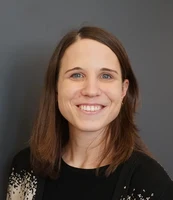
Dr. Mareike Baer
Raum 0.012, EG
Friedrich-Hirzebruch-Allee 7
53115 Bonn